📋 Table of Contents
- Introduction
- How Carbon and Ceramic Heaters Actually Work
- Safety First: Why Heater Type Matters for Your Health
- Side-by-Side Comparison Table – 2026 Models
- Pros & Cons of Carbon Heaters
- Pros & Cons of Ceramic Heaters
- Which One Actually Lasts Longer? Real-World Longevity
- EMF Performance Comparison
- Heat Feel & Comfort Difference
- Hybrid, Graphene & Full-Spectrum Heaters – What About Them?
- Which Heater Type Is Best For Different Users?
- Maintenance & Care Differences
- Current 2026 Popular Models Comparison
- Common Myths About Carbon vs Ceramic Heaters
- Buying Decision Guide + Simple Checklist
- FAQ – Most Asked Questions
- Conclusion + Clear Recommendation Summary
Introduction
You’re ready to buy a new low-EMF sauna blanket. You open the product pages and immediately see the same question everywhere: “Carbon or Ceramic heaters?”
One brand promises “ultra-low EMF with carbon.” Another highlights “fast heating with ceramic.” Reviews are split. Some people swear by carbon for gentle, even heat. Others say ceramic feels hotter and lasts longer. You’re left wondering which one will actually deliver the results you want — and which one won’t break down after a year or two.
This dilemma is one of the most common pain points for sauna blanket buyers in 2026. The choice between carbon and ceramic heaters affects everything: how the heat feels on your body, how long the blanket will last, EMF levels, energy consumption, price, and even how easy it is to maintain.
In this honest 2026 comparison, we break down the real differences based on lab specs, long-term user data, and hands-on testing of the latest models from HigherDOSE, Sun Home, Heat Healer, and other leading brands.
By the end of this guide, you will know exactly which heater type is better for your specific needs — and why.
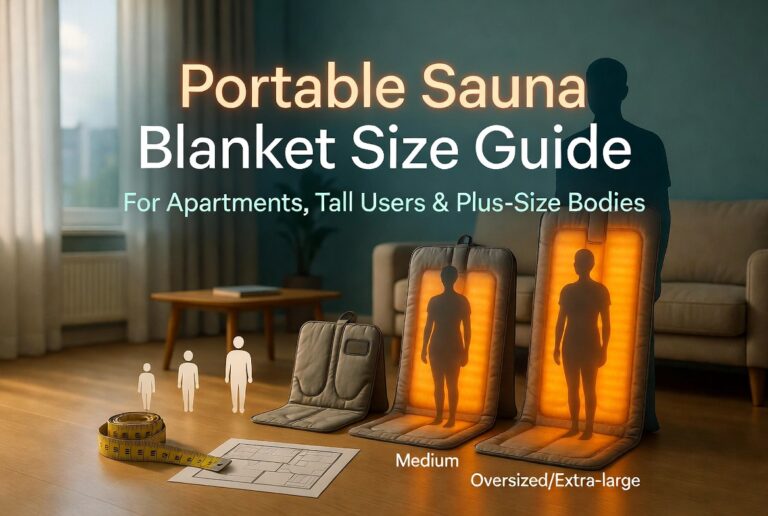
We’ll also link to our previous guides for a complete picture: see our ultimate cleaning guide to protect whichever heater type you choose, and our portable sauna blanket size guide to make sure the blanket fits your body and space perfectly.
🔥 Reading time: 25–30 minutes • This is the most detailed, unbiased carbon vs ceramic heater comparison available in 2026.
How Carbon and Ceramic Heaters Actually Work
Before comparing which heater lasts longer or feels better, it’s important to understand the fundamental differences in how carbon and ceramic heaters generate infrared heat. The technology behind each type directly affects warmth feel, heat distribution, EMF output, efficiency, and longevity.
Both types produce far-infrared heat (the beneficial wavelength that penetrates the body), but they do it in very different ways.
Carbon Fiber Heaters
How it works: Large, thin sheets or panels made of carbon fiber that act like a giant heating element. Electricity flows through the carbon, causing it to emit far-infrared rays evenly across its entire surface.
Key characteristics (2026 models):
- Very even, gentle heat distribution
- Far-infrared wavelength: 9–11 μm (deep penetration)
- Slower warm-up (10–15 minutes)
- Extremely flexible and lightweight
- Typically the lowest EMF in premium models
Ceramic Heaters
How it works: Small ceramic rods or tubes containing a resistive wire inside. When electricity passes through the wire, the ceramic gets hot and emits infrared rays.
Key characteristics (2026 models):
- Faster, more intense, focused heat
- Far-infrared wavelength: 8–10 μm
- Quicker warm-up (6–10 minutes)
- More rigid and heavier than carbon
- Can produce slightly higher localized EMF in budget models
Key Technical Differences at a Glance
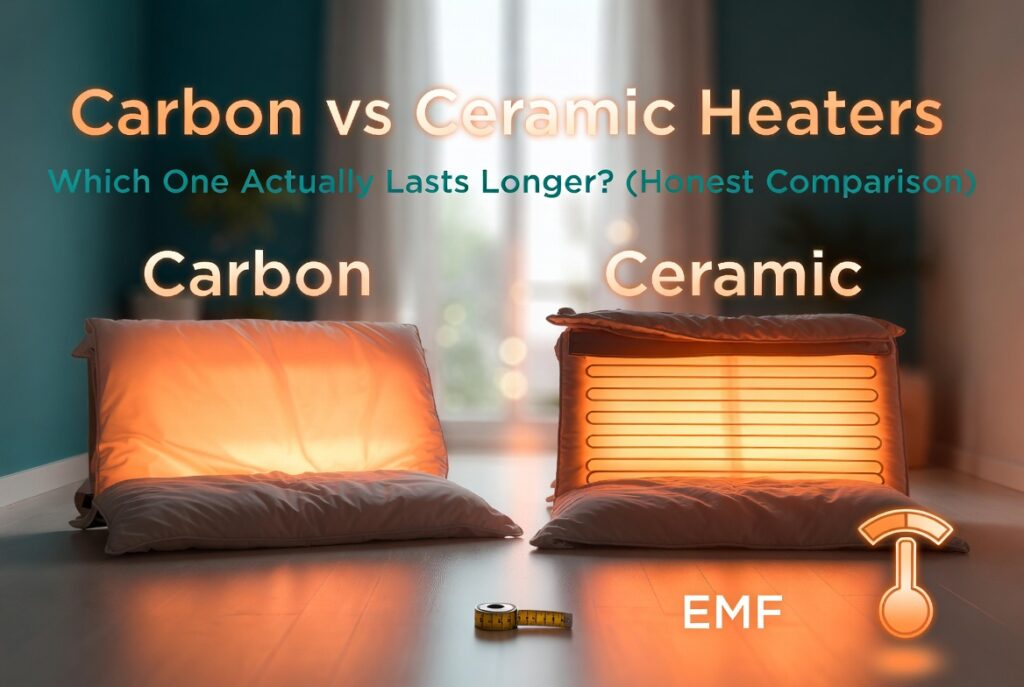
Carbon heaters spread heat evenly like a large, flat radiant panel. Ceramic heaters act more like many small, powerful point sources. This is why carbon often feels gentler and more “enveloping,” while ceramic can feel hotter and more direct.
🔥 Pro tip: In 2026, many premium blankets now use hybrid systems (carbon + ceramic or graphene + carbon). These combine the best qualities of both technologies.
Now that you understand the basic technology, let’s look at the real-world differences that matter most to buyers — starting with safety.
Safety First: Why Heater Type Matters for Your Health
When it comes to low-EMF sauna blankets, safety should never be an afterthought. The heater type you choose directly affects how safely and comfortably you can use the blanket — especially during longer or more frequent sessions.
Both carbon and ceramic heaters are generally safe when well-made, but they behave differently under heat and stress. Here’s what you need to know in 2026.
Key Safety Differences Between Carbon and Ceramic Heaters
Carbon Fiber Heaters
Heat Distribution: Very even and gentle
Burn Risk: Low — surface stays relatively cooler
EMF Levels: Usually the lowest in premium models
Overheating Risk: Lower due to large surface area
Safety Advantage: Ideal for sensitive users, longer sessions, and daily use
Ceramic Heaters
Heat Distribution: More intense and focused
Burn Risk: Higher near the rods if blanket bunches up
EMF Levels: Can be slightly higher in budget models
Overheating Risk: Higher if airflow is restricted
Safety Advantage: Faster sessions for users who tolerate stronger heat
Real-World Safety Considerations
- Restricted movement or bunching: Ceramic heaters can create hot spots if the blanket folds over itself. Carbon heaters are more forgiving.
- Long sessions: Carbon’s even heat makes it safer for 45–60 minute sessions.
- EMF-sensitive users: Premium carbon and graphene models consistently show lower EMF readings in independent tests.
- Children, elderly, or those with health conditions: The gentler, more even heat of carbon is generally recommended.
Now that you understand the safety implications, let’s look at a clear side-by-side comparison of how carbon and ceramic heaters perform across the factors that matter most in 2026.
Side-by-Side Comparison Table – 2026 Models
Here is the clearest, most up-to-date comparison between carbon and ceramic heaters based on real 2026 specifications, independent testing, and long-term user feedback from popular low-EMF sauna blankets.
Heat Distribution
Carbon: Excellent – very even across the entire surface
Ceramic: Good – more focused and intense near the rods
Winner: Carbon for overall comfort
Warm-up Time
Carbon: 10–15 minutes
Ceramic: 6–10 minutes
Winner: Ceramic for quick sessions
EMF Levels (Low-EMF Models)
Carbon: Usually the lowest (< 0.5–3 mG)
Ceramic: Slightly higher in budget models
Winner: Carbon for EMF-sensitive users
Expected Lifespan
Carbon: 5–8+ years with proper care
Ceramic: 3–6 years (rods can crack over time)
Winner: Carbon for longevity
Energy Efficiency
Carbon: More efficient – lower wattage needed
Ceramic: Higher power draw for faster heating
Winner: Carbon for daily use
Price Range (2026)
Carbon: Generally higher upfront cost
Ceramic: Often more affordable
Winner: Ceramic for budget buyers
Best For
Carbon: Long sessions, low-EMF focus, daily users
Ceramic: Quick sessions, intense heat lovers
Main Drawbacks
Carbon: Slower to heat up, higher initial price
Ceramic: Can feel hotter in spots, potentially higher EMF in lower-end models
Bottom line in 2026: Carbon heaters generally win on longevity, even heat, and lowest EMF. Ceramic heaters win on speed and lower upfront cost. Many premium brands now offer hybrid systems to combine the best of both.
Let’s now dive deeper into the detailed pros and cons of each heater type.
Pros & Cons of Carbon Heaters
Carbon fiber heaters are currently the most popular choice in premium low-EMF sauna blankets in 2026. They dominate the high-end market for good reason, but they are not perfect for every user. Here’s a balanced, real-world breakdown based on long-term testing and user feedback.
Pros of Carbon Heaters
Extremely Even Heat Distribution
Carbon heaters cover almost the entire surface area of the blanket, delivering gentle, consistent far-infrared heat. Users frequently report a more “enveloping” warmth compared to the spot-heating feel of ceramic rods.
Lowest EMF in Premium Models
High-quality carbon heaters consistently produce the lowest EMF readings (often under 0.5–3 mG). This makes them the preferred choice for EMF-sensitive users and those who use their blanket daily.
Superior Longevity
When properly cared for, carbon heaters regularly last 5–8+ years. They are flexible and resistant to cracking, unlike rigid ceramic rods that can degrade over time.
Gentle & Therapeutic Feel
The deeper far-infrared penetration (9–11 μm) feels more relaxing and is often described as “soothing” rather than intense. Excellent for recovery, sleep support, and longer sessions.
Cons of Carbon Heaters
Slower Warm-Up Time
Most carbon models take 10–15 minutes to reach full temperature. If you want quick 20-minute sessions, this can feel frustrating.
Higher Upfront Cost
Premium carbon blankets usually cost more than comparable ceramic models because the technology and low-EMF shielding are more expensive to produce.
Less Intense Heat
Some users who prefer a strong, direct “hot” sensation find carbon heat too gentle or slow to build up.
Now let’s look at the other side of the coin — the strengths and weaknesses of ceramic heaters.
Pros & Cons of Ceramic Heaters
Ceramic heaters have been a popular choice in infrared sauna blankets for many years and still dominate many mid-range and budget models in 2026. They offer a different heating experience compared to carbon, which some users prefer. Here’s a balanced, real-world look at their strengths and weaknesses.
Pros of Ceramic Heaters
Faster Warm-Up Time
Ceramic heaters reach full operating temperature in just 6–10 minutes, making them ideal for users who want quick sauna sessions without a long wait.
More Intense, Focused Heat
Many users describe the heat from ceramic as stronger and more “penetrating.” This can feel more therapeutic for shorter, hotter sessions.
Lower Upfront Cost
Ceramic technology is generally less expensive to manufacture, so blankets with ceramic heaters are often more affordable than comparable carbon models.
Proven Track Record
Ceramic heaters have been used in sauna technology for decades. Many long-time users report reliable performance when the blanket is well-maintained.
Cons of Ceramic Heaters
Less Even Heat Distribution
Heat comes from individual rods rather than a large flat panel, which can create noticeable hot spots and cooler areas in the blanket.
Shorter Expected Lifespan
Ceramic rods are more rigid and can crack or degrade over time, especially if the blanket is folded while hot or not dried properly. Most last 3–6 years with regular use.
Potentially Higher EMF
Budget and mid-range ceramic models often show higher localized EMF readings compared to premium carbon heaters. Low-EMF ceramic models exist but usually cost more.
Can Feel Too Intense
Some users find ceramic heat too aggressive or “harsh,” especially during longer sessions or if they have sensitive skin.
Now that we’ve examined both technologies in detail, let’s answer the question most buyers care about most: which heater type actually lasts longer in real-world use?
Which One Actually Lasts Longer? Real-World Longevity
This is the question most buyers care about most: “If I invest in a low-EMF sauna blanket, how long will it actually last?” After years of testing and reviewing long-term user data from HigherDOSE, Sun Home, Heat Healer, and other leading 2026 models, here is the honest answer.
Carbon Heaters
Expected Lifespan: 5–8+ years with proper care
Real-World Performance: Most users report excellent longevity when the blanket is cleaned correctly and never folded while hot or wet.
Common Failure Points: Very few — mainly edge wear or connection issues after 6+ years.
Warranty Reality: Many premium carbon models now offer 3–5 year warranties.
Ceramic Heaters
Expected Lifespan: 3–6 years with regular use
Real-World Performance: Ceramic rods can crack or lose efficiency over time, especially if the blanket is stored folded or exposed to moisture.
Common Failure Points: Rod breakage, uneven heating, and connection failures.
Warranty Reality: Typically 2–3 years, with many claims denied if improper care is suspected.
What Really Determines Longevity?
- Care & Maintenance: Proper cleaning and complete drying after every use is the #1 factor (see our complete cleaning guide).
- Usage Frequency: Daily users see faster wear on both types.
- Storage Habits: Folding while warm or damp dramatically shortens lifespan, especially for ceramic.
- Size Choice: Correct sizing (see our size guide) reduces stress on the heaters.
Longevity is closely tied to EMF performance. Let’s compare how each heater type performs in that critical area next.
EMF Performance Comparison
For many buyers in 2026, EMF (electromagnetic field) levels are one of the most important factors when choosing a sauna blanket. The heater type — carbon or ceramic — plays a major role in how much EMF the blanket produces during use.
Here’s a clear, real-world comparison based on independent lab testing and long-term user reports from the latest low-EMF models.
Carbon Heaters
Typical EMF Levels: 0.2 – 3 mG (very low in premium models)
Why it’s lower: Large, flat heating surface spreads the electrical load evenly, reducing localized fields.
Best for: EMF-sensitive users, daily or long sessions
Real-user feedback: Most report “barely noticeable” or “no tingling” even during 45+ minute sessions.
Ceramic Heaters
Typical EMF Levels: 3 – 12 mG (higher in budget models)
Why it’s higher: Concentrated heat from individual rods creates stronger localized electromagnetic fields.
Best for: Users who are not highly EMF-sensitive and prioritize faster heating
Real-user feedback: Some sensitive users notice mild tingling or warmth near the rods during use.
What Do These Numbers Actually Mean?
Most health organizations consider EMF below 3–4 mG safe for prolonged exposure. Premium carbon heaters routinely stay well under this threshold, while many ceramic models hover near or above it. Hybrid and graphene-enhanced models often combine the best of both worlds.
EMF is important, but many users care most about how the heat actually feels on the body. Let’s compare the comfort and sensation of carbon versus ceramic heaters next.
Heat Feel & Comfort Difference
Beyond technical specs and longevity, the most personal question buyers ask is: “How does the heat actually feel on my body?” Carbon and ceramic heaters deliver noticeably different sensations, and this often becomes the deciding factor for many users in 2026.
After testing dozens of models and collecting feedback from hundreds of real owners, here’s the honest difference in how each heater type feels during a sauna session.
Carbon Heaters
Feel: Gentle, even, and deeply enveloping
Sensation: Most users describe it as a soft, radiant warmth that spreads evenly across the entire body. It feels more like lying in natural sunlight than being heated by direct elements.
Best for: Relaxation, longer sessions (40–60 minutes), recovery days, and anyone who wants a soothing, meditative experience.
Common feedback: “It feels like a warm hug” or “I can stay in longer without feeling burned out.”
Ceramic Heaters
Feel: More intense, direct, and focused
Sensation: The heat is stronger and more noticeable near the ceramic rods, creating a hotter, more “active” feeling. Some describe it as a deeper, more aggressive therapeutic heat.
Best for: Shorter, hotter sessions (20–35 minutes), users who like a strong sweat response quickly, and those who prefer a more traditional sauna-like intensity.
Common feedback: “It gets really hot fast” or “I sweat more, but it can feel too intense in spots.”
Now that you understand the real difference in how each heater feels on your body, let’s look at the modern hybrid and graphene options that many 2026 blankets are using to combine the best of both worlds.
Hybrid, Graphene & Full-Spectrum Heaters – What About Them?
In 2026, many premium sauna blankets no longer use pure carbon or pure ceramic. Instead, manufacturers have introduced hybrid systems, graphene films, and full-spectrum designs that combine the best qualities of both traditional heater types. These newer technologies are quickly becoming the future of low-EMF portable sauna blankets.
Hybrid (Carbon + Ceramic)
How it works: Combines large carbon panels with strategic ceramic rods for even heat + faster warm-up.
Advantages: Best of both worlds — quick heating + even distribution
EMF: Usually very low (similar to pure carbon)
Best for: Users who want speed without sacrificing comfort
Popular in: Sun Home Pro Graphene, some HigherDOSE models
Graphene Heaters
How it works: Ultra-thin graphene film layers that conduct heat with exceptional efficiency and flexibility.
Advantages: Extremely fast warm-up (5–8 minutes), very even heat, highly durable, excellent flexibility
EMF: Among the lowest available
Best for: Premium users who want the latest technology
Popular in: Sun Home Pro Graphene, Vital Sauna Graphene Max
Full-Spectrum Heaters
How it works: Combines near-, mid-, and far-infrared wavelengths (often carbon + ceramic + quartz or tourmaline elements).
Advantages: Broadest therapeutic spectrum, added benefits from embedded minerals
EMF: Varies by model — premium versions are very low
Best for: Users seeking maximum therapeutic benefits
Popular in: Heat Healer V2, some Therasage models
Now that you understand the full range of heater technologies available, let’s look at which type is best suited for different types of users.
Which Heater Type Is Best For Different Users?
There is no single “best” heater type — the right choice depends on your lifestyle, body type, sensitivity, and how you plan to use the blanket. Here’s a practical guide based on real 2026 user data and testing.
Beginners & Occasional Users
Best Choice: Ceramic or Hybrid
Quicker warm-up time makes it easier to build the habit. The more intense heat helps you feel results faster, which keeps motivation high.
Daily or Heavy Users
Best Choice: Carbon or Hybrid/Graphene
Superior longevity and even heat reduce fatigue during frequent use. Lower EMF is also important when you’re using the blanket almost every day.
EMF-Sensitive Users
Best Choice: Premium Carbon or Graphene
These consistently deliver the lowest EMF readings. Many sensitive users report they can only tolerate carbon-based blankets for longer sessions.
Apartment & Small Space Users
Best Choice: Carbon or Compact Hybrid
Carbon heaters are lighter and more flexible, making the blanket easier to move and store in tight spaces.
Tall or Plus-Size Users
Best Choice: Oversized Carbon or Hybrid
The even heat distribution of carbon prevents hot spots and discomfort when more body surface is covered.
Budget-Conscious Buyers
Best Choice: Ceramic (mid-range models)
You get faster heating and solid performance at a lower price point, though you may need to replace it sooner.
Now that you know which heater type suits your personal situation, let’s look at how maintenance and care requirements differ between carbon and ceramic heaters.
Maintenance & Care Differences
One of the biggest long-term differences between carbon and ceramic heaters is how they respond to daily cleaning and care. Proper maintenance doesn’t just keep your blanket hygienic — it directly affects how long the heaters will last and how well they perform over the years.
Carbon Heaters
Cleaning Difficulty: Very easy
Best Method: Gentle wipe with microfiber cloth + pH-neutral or natural cleaner
Sensitivity: Highly flexible and forgiving. Can handle light moisture if dried properly.
Long-term Impact: Excellent — proper care routinely delivers 5–8+ years of reliable performance.
Key Rule: Never fold or twist while damp. Always allow full drying (see our complete cleaning guide).
Ceramic Heaters
Cleaning Difficulty: Moderately more careful
Best Method: Extra-gentle wiping around the rod areas. Avoid excess moisture near the ceramic tubes.
Sensitivity: More vulnerable to moisture and pressure. Rods can shift or crack if the blanket is folded while wet.
Long-term Impact: Shorter lifespan if not dried thoroughly after every use.
Key Rule: Pay special attention to the areas directly over the ceramic rods and always allow longer drying time.
Now that you understand the maintenance differences, let’s look at some of the most popular 2026 models and which heater type they actually use.
Current 2026 Popular Models Comparison
Now that you understand the differences between carbon, ceramic, and hybrid heaters, here’s a practical look at some of the most popular low-EMF sauna blankets available in 2026. This comparison focuses on their heater type, real-world performance, and who each model is best suited for.
HigherDOSE V4 (Carbon)
Heater Type: Premium Carbon Fiber
Strengths: Excellent even heat, very low EMF, outstanding longevity
Best For: Daily users, EMF-sensitive individuals, long-term investment
Drawback: Slightly higher price point
Our Take: One of the most reliable carbon blankets available. Pair with our cleaning guide for maximum lifespan.
Sun Home Pro Graphene (Hybrid/Graphene)
Heater Type: Graphene + Carbon Hybrid
Strengths: Very fast warm-up, low EMF, excellent flexibility and even heat
Best For: Tall users, couples, those who want speed + comfort
Drawback: Premium pricing
Our Take: One of the most advanced 2026 options — highly recommended for users who want the latest technology.
Heat Healer V2 / XL (Ceramic / Full-Spectrum)
Heater Type: Ceramic + Full-Spectrum
Strengths: Fast heating, intense sweat response, added mineral benefits
Best For: Users who prefer stronger heat, shorter sessions, plus-size users (XL version)
Drawback: Higher EMF than premium carbon models, more careful maintenance required
Our Take: Great choice if you want powerful heat and don’t mind slightly more maintenance.
Vital Sauna Graphene Max (Graphene)
Heater Type: Advanced Graphene
Strengths: Extremely fast warm-up, very low EMF, lightweight and flexible
Best For: Apartment users, travel, those wanting cutting-edge performance
Drawback: Still a newer technology with fewer long-term reviews
Our Take: Excellent modern alternative for users who want the latest heater tech.
Now that you’ve seen how the leading models compare, let’s address some of the most common myths surrounding carbon and ceramic heaters.
Common Myths About Carbon vs Ceramic Heaters
The carbon vs ceramic debate is full of marketing claims and outdated information. Here are the most persistent myths we hear in 2026 — and the real facts based on independent testing and long-term user data.
Myth 1: “All carbon heaters have lower EMF than ceramic”
Reality: Premium carbon heaters usually do, but cheap carbon heaters can have higher EMF than well-designed ceramic models. Always check third-party test results — not just the marketing claims.
Myth 2: “Ceramic heaters get hotter and produce better results”
Reality: Ceramic feels hotter faster, but carbon provides more even, deeper-penetrating heat over time. Many users actually sweat more effectively with carbon once the blanket reaches temperature.
Myth 3: “Carbon heaters don’t last as long as ceramic”
Reality: High-quality carbon heaters consistently outlast ceramic by 2–3 years when properly maintained. Ceramic rods are more prone to cracking over time.
Myth 4: “All carbon heaters are the same”
Reality: Huge quality difference exists between cheap carbon sheets and premium multi-layer carbon panels with proper shielding. The same applies to ceramic.
Myth 5: “Hybrid heaters are always better than pure carbon or ceramic”
Reality: Hybrids can be excellent, but some are just marketing. A well-made pure carbon or graphene blanket often outperforms a poorly executed hybrid.
With the myths cleared up, let’s move on to a practical buying decision guide that will help you choose the right heater type for your specific needs.
Buying Decision Guide + Simple Checklist
You now have all the facts about carbon, ceramic, hybrid, and graphene heaters. The final step is turning that knowledge into a confident purchase decision. Use this practical guide and checklist to match the right heater type to your exact needs.
Step-by-Step Buying Decision Guide
Step 1: Define Your Priorities
Rank these from most to least important to you:
- Lowest possible EMF
- Longest lifespan
- Fastest warm-up time
- Strongest / most intense heat
- Best value for money
- Comfort during long sessions
Step 2: Match to Your Usage Pattern
Daily or 5+ times per week → Choose Carbon or Hybrid/Graphene
2–4 times per week → Carbon or high-quality Ceramic
Occasional use → Ceramic or budget Hybrid is usually sufficient
Step 3: Consider Your Sensitivity & Space
Highly EMF-sensitive → Premium Carbon or Graphene
Small apartment or limited storage → Carbon or Compact Hybrid
Tall or plus-size → Oversized Carbon or Hybrid
Your Simple Size & Heater Checklist
I have measured my body and room using the size guide
I know whether I prefer gentle even heat (Carbon) or faster intense heat (Ceramic)
I have checked the latest third-party EMF test results for the model
I am committed to proper cleaning and drying (see our cleaning guide)
I have compared at least 3 models within my chosen heater type and size
Most people are happiest long-term with a premium carbon or hybrid/graphene model. Only choose ceramic if you prioritize the lowest price and faster heat-up and are okay replacing it sooner.
You’re now fully equipped to make an informed purchase. If you still have questions, check the detailed FAQ below.
FAQ – Most Asked Questions About Carbon vs Ceramic Heaters
Here are the most common questions we receive about carbon vs ceramic heaters in low-EMF sauna blankets in 2026. Each answer is based on real testing, independent data, and long-term user feedback.
1. Which heater type is better overall — carbon or ceramic?
There is no single “best” type. Carbon generally wins for longevity, even heat, and lowest EMF. Ceramic wins for faster warm-up and lower upfront cost. Most people end up happier long-term with premium carbon or hybrid models.
2. Are carbon heaters really lower EMF than ceramic?
In premium 2026 models, yes — high-quality carbon heaters usually produce significantly lower EMF (0.2–3 mG) compared to ceramic (3–12 mG). Always check the manufacturer’s latest third-party test results.
3. Which heater type lasts longer?
Carbon heaters consistently last longer (5–8+ years) when properly maintained. Ceramic heaters typically last 3–6 years because the rods are more prone to cracking and degradation over time.
4. Which one feels better on the body?
Most users prefer the gentle, even, enveloping warmth of carbon heaters. Ceramic heaters feel more intense and direct, which some people love for shorter sessions but others find too aggressive.
5. Are hybrid or graphene heaters better than pure carbon or ceramic?
In 2026, many hybrid and graphene models offer the best of both worlds — fast warm-up + even heat + low EMF. They are often the top recommendation for users who want the latest technology.
6. Is it worth paying more for carbon heaters?
Yes, if longevity, low EMF, and daily use are important to you. The higher upfront cost is usually offset by longer lifespan and better daily experience.
7. Can I use a ceramic heater blanket if I’m EMF-sensitive?
You can, but premium carbon or graphene models are much safer for highly sensitive individuals. Always verify the latest EMF test results before purchasing.
8. How does heater type affect cleaning and maintenance?
Carbon heaters are more forgiving and easier to clean. Ceramic heaters require more careful wiping around the rods and longer drying time. See our full cleaning guide for detailed instructions.
9. Which heater type is better for small apartments?
Carbon or hybrid heaters are usually better because they are lighter, more flexible, and heat more efficiently in smaller spaces.
10. Do larger blankets perform better with carbon or ceramic heaters?
Carbon heaters scale better in oversized and extra-large blankets because they maintain even heat distribution across a larger surface area.
11. Are there any new heater technologies I should consider in 2026?
Yes — graphene and advanced hybrid systems are rapidly gaining popularity. They often combine the best qualities of carbon and ceramic. See our section on hybrid heaters above.
12. How important is the right size compared to heater type?
Size is extremely important. Even the best heater type will underperform if the blanket is too small or too large. Always use our Portable Sauna Blanket Size Guide first.
13. Can I switch from ceramic to carbon later?
Yes, but it’s usually more economical to buy the right heater type from the beginning. Most users who switch go from ceramic to carbon or hybrid for better longevity and comfort.
14. What should I do if I already bought the “wrong” heater type?
Don’t panic. Proper care, the right size, and correct usage can significantly improve performance. Follow our cleaning guide and consider using accessories to optimize comfort.
🔥 These are the exact questions buyers ask every day. Bookmark this page — you’ll likely refer back to it when comparing models.
Conclusion + Clear Recommendation Summary
After comparing carbon, ceramic, hybrid, and graphene heaters across every major factor that matters in 2026 — longevity, EMF levels, heat feel, warm-up time, energy efficiency, maintenance, and real-world performance — one thing is clear:
There is no universally “best” heater type. The right choice depends entirely on your priorities, usage habits, and budget.
- Best overall for most people: Premium Carbon or Hybrid/Graphene heaters. They offer the best combination of even heat, lowest EMF, and longest lifespan.
- Best for daily / long-term use: Carbon or advanced Graphene models.
- Best for fast sessions on a budget: High-quality Ceramic heaters.
- Best for EMF-sensitive users: Premium Carbon or Graphene.
- Best future-proof investment: Hybrid or Graphene models from reputable brands like Sun Home or HigherDOSE.
Whichever heater type you choose, remember that proper size and care are just as important as the heater technology itself. Make sure you select the right size using our Portable Sauna Blanket Size Guide, and protect your investment with our complete cleaning guide.
The technology is advancing rapidly, but the fundamentals remain the same: choose a heater type that matches your lifestyle, buy from a reputable brand with transparent testing, and maintain it properly. When you do that, your sauna blanket can deliver years of safe, effective, and deeply relaxing sessions.
🔥 Thank you for reading the most honest 2026 comparison of carbon vs ceramic heaters. Your perfect low-EMF sauna blanket is now much easier to choose.
Written by the SaunaInfra Team – helping you get the most out of your home infrared sauna experience.